
Weather and Wind: A Pre-Bet Checklist for MLB Home Run Props
 Available in US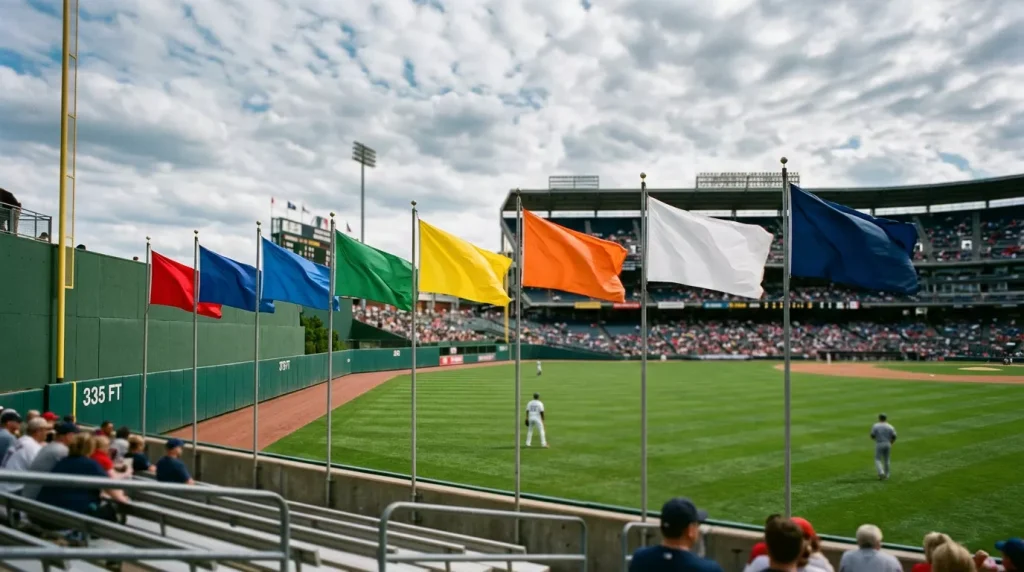
Contents
The night the wind killed my entire card
One April evening I had four HR-prop bets queued up on Wrigley Field, three of them with strong underlying profiles. The wind was forecast at 14 mph blowing straight in from centre. I told myself the hitters were good enough to overcome it. Zero homers across all four games at that park. I went 0-for-4, and I learned the lesson properly that night: weather is not a tiebreaker. On a windy day, weather is the bet.
Most HR-prop research stops at the player and the matchup. The disciplined bettors keep going — to the day’s weather forecast for the specific stadium, hour by hour if needed, because conditions at first pitch are different from conditions in the seventh inning. The bookmaker prices the day’s weather into the HR line. Sometimes accurately. Often not.
See also: best mlb player prop bets — weather and wind impact.
Temperature and what every degree does to a fly ball
Air temperature affects ball flight directly. Warmer air is less dense; the ball encounters less resistance and travels further. Cooler air does the opposite. The rough industry rule is that each 10 degrees Fahrenheit of temperature corresponds to about a foot of additional carry on a fly ball. A 75-foot warmer evening versus a 55-foot cool night can mean two extra feet of distance, which is the margin between a flyout to the warning track and a homer.
The biggest temperature swings happen in April and October. Day games in spring at northern parks can produce conditions that are genuinely cold enough to depress HR rates noticeably. The same parks in July and August reverse the dynamic. October postseason baseball, especially at night in the Northeast, is the most reliable temperature-driven HR suppressor on the calendar.
The benchmark profile for a hot-form hitter still holds in any temperature — exit velocity above 90 mph, barrel rate above 15 per cent, xwOBA above 0.370 across a recent 10-to-15 day window. But the temperature multiplier on his projected HR probability bends. Cold air takes carry off even elite contact; warm air gives marginal hitters a leg up. Read the day’s forecast, not the season averages.
Wind direction matters more than wind speed
This is the variable that catches more recreational bettors than any other. Wind blowing out at 8 mph is a small positive for HR-prop overs. Wind blowing in at 8 mph is a large negative. The asymmetry is real — wind blowing in suppresses HR rates more than equivalent wind blowing out boosts them, because hitters cannot fully compensate for headwinds, while tailwinds primarily extend balls that would have been on the warning track anyway.
The compass direction matters as much as the speed. Wind blowing out to right field at a stadium with short right-field power alleys is a different bet than wind blowing out to centre at the same stadium. Wind out to right at Yankee Stadium, for example, is far more meaningful for HR-prop overs than wind out to a 408-foot dead-centre fence at a neutral park.
The threshold I use mentally. Sustained wind under 8 mph in any direction is essentially weather neutral. Eight to 15 mph blowing in is a strong fader signal for HR-prop overs. Above 15 mph in either direction starts dominating the bet. The exception is wind blowing straight across the field — left to right or right to left — which has smaller HR impact but can knock down deep fly balls into foul territory.
Humidity and air density
The quietest weather variable, and the one most bettors ignore entirely. Humid air is, counter-intuitively, less dense than dry air at the same temperature, because water molecules are lighter than the nitrogen and oxygen they displace. That means humid days promote slightly longer ball flight than dry days at the same temperature.
The effect is small relative to wind or temperature, but it compounds. A warm, humid evening in the Midwest in July is a more HR-friendly environment than a warm, dry evening of the same temperature in Arizona. The same hitter with the same swing produces measurably different distance distributions in the two conditions.
The other place humidity matters is for breaking-ball pitchers. Heavy, humid air can flatten breaking-ball movement, which has knock-on effects for K-prop unders against finesse pitchers. I do not use humidity as a primary input on any prop, but I check it as a tiebreaker when temperature and wind are close to neutral.
Domes and retractable roofs
Domes neutralise weather entirely. A closed roof eliminates wind, fixes temperature, and removes humidity variation from the bet. That is its own kind of information. Domes effectively reset the HR-prop calculation to the park’s baseline factor without any weather amplification or dampening. For HR-prop work, dome games are the most predictable environment of the slate.
Retractable roofs are the variable case. The decision to open or close the roof is sometimes announced shortly before first pitch, and the difference can be material. A retractable-roof park playing closed has dome-like behaviour; the same park playing open is governed by the day’s wind and temperature. The Texas Rangers’ Globe Life Field, the Diamondbacks’ Chase Field, and the Mariners’ T-Mobile Park are the names where the roof decision can change the HR-prop calculus on a given night.
A 60-second pre-bet weather checklist
The routine I run on every HR prop before placing it. First, the temperature forecast at the stadium for first pitch — is it warm, cool, or cold relative to the season norm at that park? Cold weather depresses; warm boosts. Second, the wind direction and speed at first pitch — is it blowing out, in, or across? Out is bullish; in is bearish; across is small. Third, the dome status — is the stadium closed, open, or convertible? Fourth, the humidity, but only as a tiebreaker when the first three are close to neutral.
What the broader integrity conversation around props has done is push more discipline into this kind of process. As one prominent agent put it about the rise of pitch-level betting and the integrity scrutiny it brought, For players, the concern they have is the integrity. They don’t want to be questioned. A player is out on the mound now, he’s sitting there and he overthrows a pitch and it goes 55 feet, you wonder. … You have to remove those prop bets to make sure that the integrities of the players aren’t questioned.
HR-prop bets, by contrast, sit clean in this picture — they depend on multiple inputs that no single actor can fix, and weather is one of those inputs. The discipline of factoring it in is also what makes the market trustworthy.
For the geometry side of the equation — how park dimensions interact with the day’s conditions — my walkthrough of ballpark effects on player prop lines sits next to this article on every research workflow.
See also: MLB park factors for player props as another venue variable.
What I never do anymore on cold, windy nights
The hard-won lesson, written out. I do not back HR-prop overs at Wrigley with wind 12 mph or more blowing in, regardless of which hitter is up. I do not back HR-prop overs in April or October at northern parks below 55 degrees, unless the matchup is overwhelmingly favourable. I do not back any HR prop without checking the wind direction first, even in dome games — because I have once or twice bet a game I assumed was indoors that turned out to have the roof open. The checklist is a cheap habit that has saved enough bets to justify itself many times over.
