
Platoon Splits and MLB Player Props: Reading LHP vs RHP Edges
 Available in US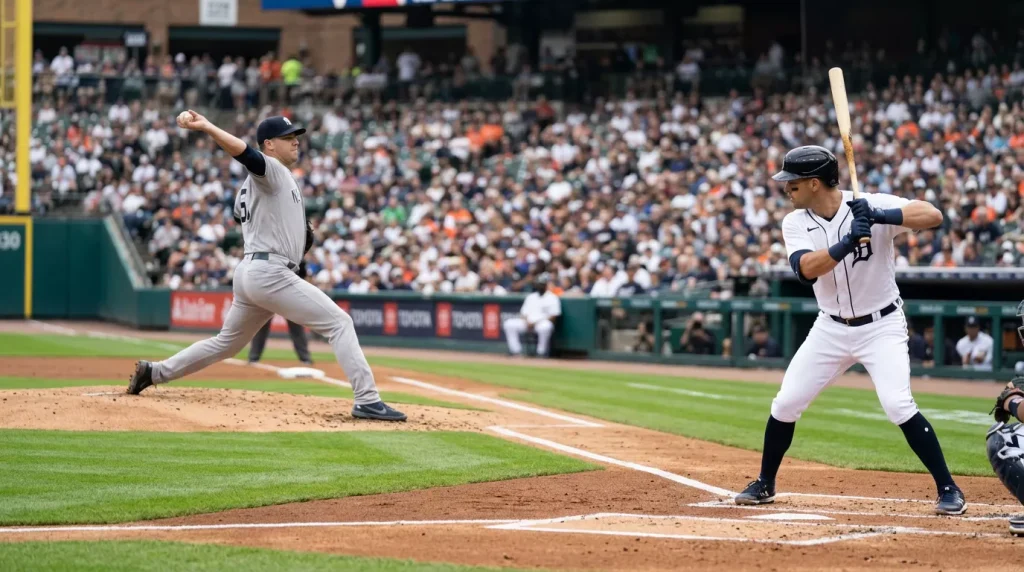
Contents
Why I trust handedness more than form on most nights
Recreational money pricing usually ignores the most reliable split in baseball: handedness. A right-handed hitter facing a left-handed pitcher is, on average, a different hitter than the same player facing a right-hander. Not slightly different. Often dramatically different. The first time I watched a “slumping” hitter post a three-hit night because he was finally facing a LHP after two weeks of righties, I started building platoon splits into every prop decision. The market still under-prices this gap, and I have been profiting off it for years.
The split is structural, not statistical noise. Hitters see the ball differently from same-handed and opposite-handed pitchers. The angle, the break, the deception all change. Pitchers are coached to attack opposite-handed hitters in different ways than same-handed ones. The effect is baked into the sport.
See also: best mlb player prop bets — platoon splits.
What platoon splits actually measure
A platoon split is the difference in a hitter’s performance between facing right-handed and left-handed pitchers, or the equivalent in reverse for a pitcher’s performance against batters of each handedness. The standard splits cover OPS, wOBA, batting average, slugging, walk rate, and strikeout rate — but for prop work, the wOBA and strikeout-rate splits are the two I track most closely.
League-wide, the platoon advantage is real. A right-handed hitter typically produces roughly 30 to 50 points of wOBA more against left-handed pitchers than against right-handers. The reverse holds for left-handed hitters facing right-handers. Individual hitters can magnify or minimise the effect — some sit at typical levels, some at extreme splits, and a small handful run reverse splits that surprise everyone every time.
The pitcher side is equally important. A starter’s strikeout rate, walk rate, and hard-hit rate allowed all split by batter handedness. A left-handed pitcher who feasts on left-handed hitters but gets pummelled by righties tells you something about which side of the matchup deserves prop attention.
Hitter-side splits — the patterns to internalise
Some hitter profiles are reliable. Switch hitters, by design, narrow the platoon gap because they can take the favourable side of any matchup, though even switch hitters tend to have a stronger natural side. Cal Raleigh’s record-setting 60-home-run season in 2026 as a switch-hitting catcher — the seventh player in MLB history to hit 60 or more in a season — is a profile that demonstrates how a switch-hitter with elite power on both sides becomes nearly matchup-proof for HR props.
Left-handed pull hitters are the platoon split’s most dramatic example. The traditional profile of a left-handed pull hitter against a right-handed pitcher who throws hard from the same arm side as the hitter expects is a recipe for elevated power. The opposite — same hitter facing a left-handed pitcher with a sweeping breaking ball — is often a flat HR-prop fade.
Shohei Ohtani’s 2026 Statcast profile — 100 barrels, hard-hit rate of 58.4 per cent — is the case study of a left-handed hitter whose underlying contact quality is so dominant that the platoon disadvantage against a tough left-hander still leaves him as a strong prop candidate. Elite contact quality narrows the platoon effect; ordinary contact widens it.
Pitcher-side splits — where the K-prop value hides
The most reliable source of strikeout-prop value I have found over the years is the same-handedness matchup pile-up. A left-handed pitcher facing a lineup with seven left-handed hitters in a row is the kind of slate where K-prop overs hit at unsustainable rates against ordinary K-prop lines. The book is pricing the pitcher’s season K/9. The lineup composition can push his effective K/9 meaningfully higher than that.
The pitchers worth chasing on platoon-friendly nights are the ones with a clearly higher K-rate against one handedness. A pitcher with a 30 per cent strikeout rate against left-handers but a 22 per cent rate against right-handers is a different bet against a lefty-stacked lineup than against a righty-stacked one. The market sometimes accounts for this. Often it does not.
The xwOBA cross-check helps here. A pitcher with a low xwOBA allowed to one handedness and an average figure against the other has structural advantage against the favourable side. Matchups where the day’s opposing lineup tilts heavily toward the favourable side are spots where K-prop overs and earned-run unders both deserve a look.
Switch hitters and reverse splits — the trap doors
Switch hitters are designed to avoid platoon disadvantage, but they are not platoon-proof. Most switch hitters have a slightly stronger side, and the gap can be wide enough to matter on a prop level. Treating every switch hitter as equally productive from both sides is a common amateur error.
Reverse splits are the rarer and more dangerous trap. A right-handed hitter who hits right-handed pitchers better than left-handers — or vice versa — defies the expected pattern. The reasons vary, but it usually relates to the hitter’s swing path or the type of pitches he sees from each handedness. Reverse-split hitters are easy money to lose against if you bet the standard platoon assumption.
The sample-size point matters most here. A reverse split off 80 plate appearances is noise; off 250 plate appearances it deserves attention; off a full career it is a feature, not a quirk. The benchmark profile for trusting any platoon split — reverse or standard — is at least 200 plate appearances of data against that pitching handedness within recent seasons.
Reading splits into a prop line
The workflow. For any hitter prop candidate, pull his wOBA split versus the day’s pitcher handedness, the season figure plus the previous-season figure if the current sample is thin. Cross-reference with the opposing pitcher’s same split against the hitter’s handedness. The matchup is the intersection — the hitter’s profile against the pitcher’s allowed profile against that batter type.
A hitter at 0.380 wOBA against right-handers facing a right-handed pitcher with a 0.330 wOBA-allowed to left-handed hitters… wait, the hitter is a left-hander in this case, so we want the pitcher’s allowed split to left-handed batters. The framing matters: always match the hitter’s handedness to the pitcher’s allowed split to that handedness, not the pitcher’s overall numbers. That alignment is where most casual bettors get tripped up.
The deepest version of this analysis pairs with hitter-walk-rate work, because walk rates also split by handedness and the same logic applies. For a closer look at how walk rates work into player props on the soft side of the market, my guide to MLB walks prop bets is the companion piece.
See also: day vs night MLB player props for situational edges.
The platoon habit that earns long-term
The discipline I keep coming back to. Platoon splits do not produce hot streaks of winners. They produce a steady reduction in the percentage of bets you place at a structural disadvantage. Each individual prop bet is still subject to all the usual variance. But over enough bets, refusing to back hitters in unfavourable platoon spots and looking specifically for hitters in favourable ones is a quiet contributor to long-run EV that I notice every season-end. The market is slow to fully price this gap. The longer you make it a habit, the more often the soft side of the line shows up where the recreational money is not.
