
MLB Park Factors: How Ballpark Effects Move Player Prop Lines
 Available in US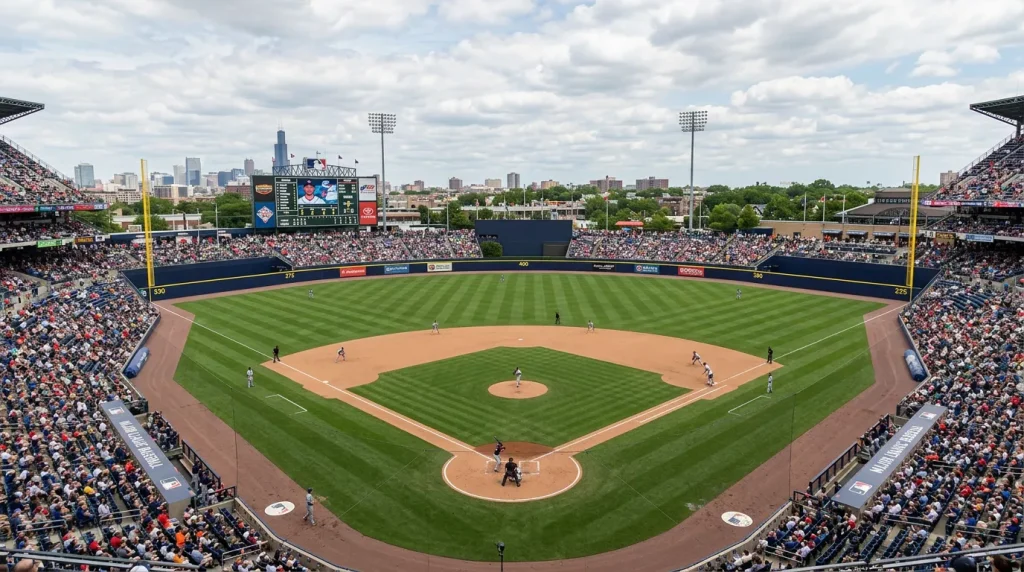
Contents
The afternoon Coors taught me geometry beats form
Years ago I had what looked like the perfect set of props lined up at Coors Field. Two hitters in middling form, modest HR-prop pricing, nothing exciting on paper. The bet won easily. The lesson I took away was not that I was clever — it was that the park did the heavy lifting. The hitters were ordinary; the field was the variable. Park factors are the invisible hand on every prop line, and the bettors who price them properly are the ones who eat. The ones who do not, get eaten.
The bookmaker prices the park into the line. That is not the question. The question is whether the price is right. Park factors do not move uniformly across every market — some skew home runs but not strikeouts, some skew strikeouts but not hits, some are neutral for power but lethal for total bases. The detail is where the edges live.
See also: best mlb player prop bets — park factors.
What a park factor is, in plain English
A park factor is a number that compares how often a specific outcome happens at a given ballpark versus the league average for that outcome. A home-run park factor of 1.20 means homers happen 20 per cent more often at that park than at a neutral one. A figure of 0.85 means they happen 15 per cent less often. Most park factors are normalised so 1.00 is league average.
Factors are calculated separately for different events. Home runs, doubles, triples, runs scored, strikeouts, and hit-types all have their own park factor. The mistake amateur bettors make is collapsing them into a single “hitter-friendly” or “pitcher-friendly” label. Coors Field is famously hitter-friendly for homers and runs, but it is also strikeout-suppressing in ways that change how K-props price there.
Park factors are also batter-handedness specific in some implementations. The pull-side foul-line dimensions matter, so a park can be HR-friendly for left-handed hitters and HR-neutral for right-handed ones — or vice versa. Reading the factor without the handedness split is one of the easiest ways to miscalculate.
Why I never use single-season park factors
A point I argue with people about more than I should. Single-season park factors are noisy. A handful of unusual weather days can swing the figure by 10 per cent. The cleanest version of a park factor uses a three-year rolling window, weighted toward the most recent season. That damps the noise without smothering recent changes — and ballparks do change, occasionally drastically, through dimension tweaks or fence rebuilds.
The three-year rolling logic is also why I am cautious in April. The first month of a season produces park-factor noise that is almost meaningless on its own; the proper figures only stabilise once a few months of data are layered in. April HR-prop bets should still weight the three-year prior, not the current month’s tiny sample.
When a park has been physically altered — fences moved, the wall raised, foul territory reshaped — the three-year window becomes useless for the season after the change. In those cases, I treat the park as neutral until at least half a season of new data is in. That is a small handful of cases, but you have to know which ones they are.
The home-run-friendly parks and why
The headline names. Coors Field sits in its own category, with altitude doing physics-class work on ball flight — the air is thinner, the ball travels further, and the HR park factor has historically sat well above 1.30. The Great American Ball Park in Cincinnati and Citizens Bank Park in Philadelphia are the next tier, with HR factors meaningfully above league average driven by short power alleys and friendly foul-line dimensions.
What unites HR-friendly parks is some combination of short outfield distances, low fence heights, and air conditions that favour carry. Altitude is the loudest of those variables but the rarest. Most HR-friendly parks earn the label through geometry — the right combination of fence distance and height in the field’s pull alleys.
Hitters who pulled the ball to advantage in 2026 were rewarded by these venues. Kyle Schwarber’s 56 home runs and 132 RBI in 2026 are not just a product of his 59.6 per cent league-leading hard-hit rate — his home park in Philadelphia contributes meaningfully. Cal Raleigh’s record-setting 60 home runs as a switch-hitting catcher in 2026, the seventh player in history to crack 60 in a season, owe some debt to his home environment as well.
The strikeout-friendly parks and why they exist
Less obvious, more profitable. Some ballparks systematically produce more strikeouts than others. Petco Park in San Diego, for example, has historically suppressed offence broadly, and that includes elevated K-prop friendliness. The visual backdrop, the marine air affecting breaking-ball movement, and the dimensions all contribute.
Strikeout-friendly parks tend to be either pitcher-friendly across the board or to have specific characteristics that aid breaking-ball pitchers — heavy air, cool weather, deep fences that take homers off the table early in counts and let pitchers attack more aggressively. The combination matters because a pitcher with a high SwStr% gets more swing-and-miss in those environments than in lighter, drier parks.
The K-prop implication. A pitcher with a strong underlying profile starting at a strikeout-friendly park is the easiest over-bet on the slate, because the pitcher gets a tailwind and the line often does not price the park aggressively enough. The opposite — a strong K-pitcher in a low-strikeout park like Coors — is one of the most reliable unders to back.
Combining park with the day’s matchup
The way I think about it. The park is a multiplier, not a primary input. It does not create a great prop bet from a poor matchup; it amplifies a good matchup and dampens a bad one. The pitcher’s metrics and the hitter’s form set the baseline; the park scales the result.
The slate-prep routine. For each prop candidate, check the park’s relevant factor for the specific market — HR factor for HR-props, K factor for strikeout-props, hits factor for total-bases work. Adjust the implied probability accordingly. If the bookmaker’s price already reflects the park-adjusted expectation, move on. If not, that is the spot to back.
The biggest mistake I watch novices make is over-weighting Coors. The park is hitter-friendly, but it is also already priced as hitter-friendly. The market knows. The edges at Coors live in the unders for strikeout markets, where the recreational money keeps pouring in on K-prop overs because the names look good and they forget that Coors suppresses strikeouts.
The weather dimension layers on top of the park dimension and frequently overrides it on a given night. For the full picture of how those two inputs interact, my pre-bet checklist on weather and wind for HR props is the next piece to read.
See also: weather and wind impact on MLB home run props.
Reading parks as a discipline
Park factors do not deliver winners directly. They deliver context. The same hitter is a different bet in Coors versus Petco; the same pitcher is a different bet in Oracle Park versus Great American Ball Park. The bettors who internalise that variability stop being surprised by results that look like upsets but are actually just geometry doing its job. Treat the park as part of the matchup, every time, and the prop pricing starts looking less mysterious than it once did.
